Coins Blast: what the trigger rule tells you about the whole game
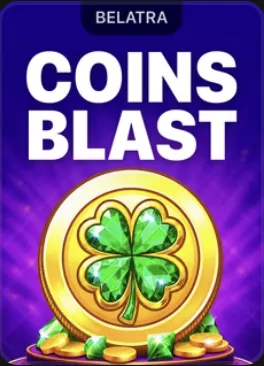
Coins Blast is part of the featured Zodiac line-up. Its artwork shows a gold coin with a green four-leaf clover, resting on a heap of smaller coins and green gems against a blue-violet background. Luck and accumulation are the obvious themes. The rest — who made the game, its return setting, how volatile it is — has not come from a verified source, so this page focuses on the one question that shapes almost every coin game: how does the feature start?
Verified versus open points
| Data point | Status |
|---|---|
| Game title, tile artwork | Known |
| Studio behind the game | Open — not named on this site |
| RTP version at Zodiac | Open — shown in the game's help screen |
| Feature trigger | Open — described in the rules |
| Top prize | Open — listed in the paytable |
Why the trigger rule matters so much
In collect-style games the base rounds often pay little, while the feature carries a large share of the total return. The trigger rule therefore sets the rhythm of the whole session. A feature that needs three special symbols anywhere on the screen arrives far more often than one that needs six, or one that needs the symbols on particular reels. The rarer the trigger, the more the game must pay when the feature finally starts, and the wider the gap between a good session and a bad one.
When you open the rules of Coins Blast, read the trigger sentence word by word. Look for:
- The count. How many coins or bonus symbols start the feature.
- The positions. "Anywhere" or "on reels two to four" make a large difference.
- Accumulation. Some games keep a meter that fills across spins; others reset on every spin.
- Retriggers. Whether extra symbols during the feature extend it.
Meters and persistence
A few coin games store progress between spins — a jar that fills, a counter that climbs. These are worth understanding before you play, because leaving such a game half-filled has a cost and changing the stake can reset or rescale the meter. If the Coins Blast rules mention any persistent element, check what happens to it when you change the bet or close the game.
Demo checklist
- Play a hundred or so demo spins and count how many features start.
- Note how often you see one symbol short of the trigger — designs often show near-misses that pay nothing.
- Compare the typical feature result with the stake.
- Test whether changing the stake affects any meter.
Decide your limit before you start; the tools are explained on our responsible gambling page.
Open the game lobby